
Coyote Season in Orange County: How to Keep Your Dog Safe Through Summer
12 min read
- 1.Why Late Spring and Summer Are Peak Coyote Activity in Orange County
- 2.Where OC Coyote Activity Is Highest This Summer
- 3.Practical Habits That Keep Your Dog Safer This Summer
- 4.What to Do If You See a Coyote on a Walk
- 5.Summer Travel and the Boarding Question
- 6.Frequently Asked Questions
- 7.The Summer Calendar Matters More in OC Than Most Places
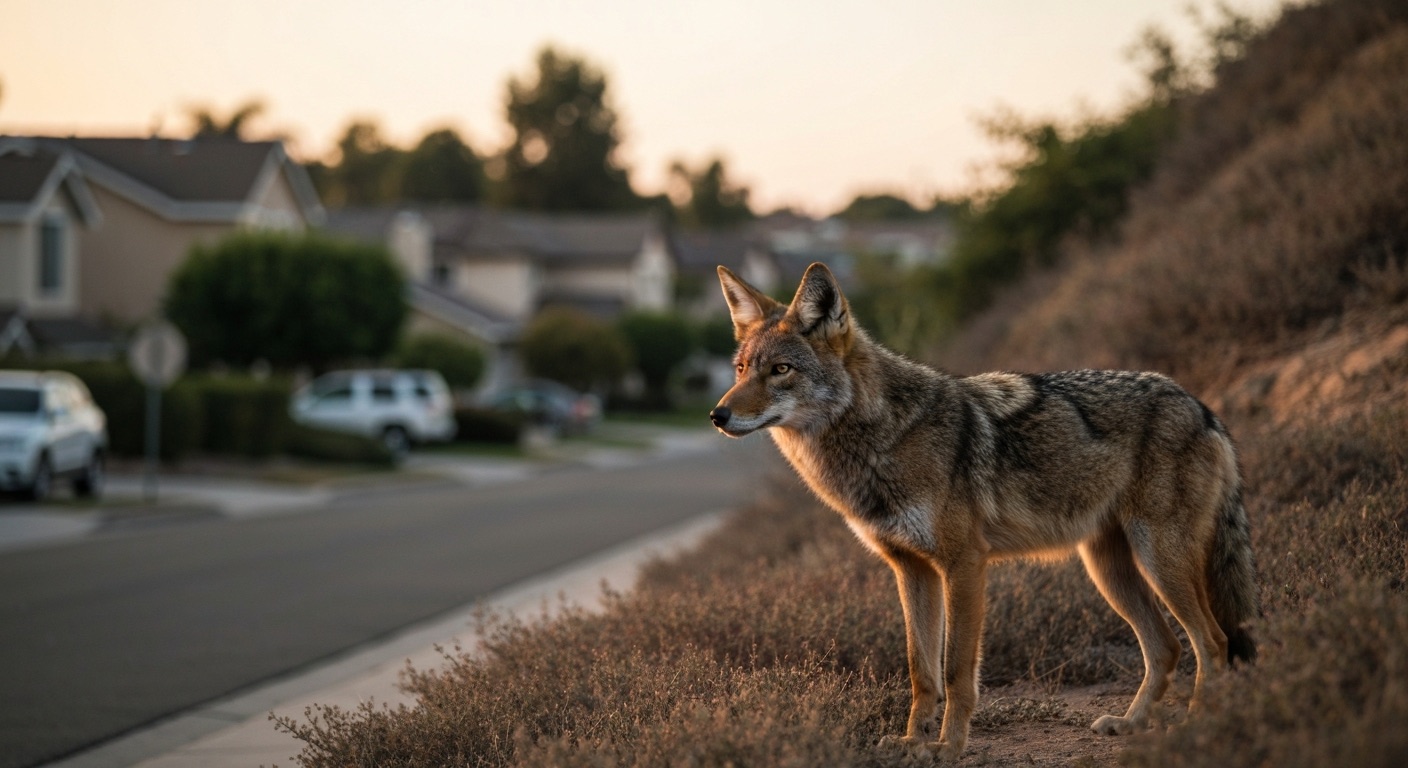
Coyote sightings ramp up in Orange County every year around late April, and by Memorial Day they're a near-daily fixture in neighborhood Nextdoor and Ring feeds across Irvine, Costa Mesa, San Juan Capistrano, and Wildomar. It's not a coincidence. Late spring and summer are peak pup-rearing season for OC's resident coyote population, which means the animals you're seeing are more protective, more active during daylight, and more willing to take risks near homes and trails to feed their litters. For dog parents, this is the time of year when the small choices — when you walk, how long the leash is, whether the back door is propped open at dusk — start to matter more than usual.
This isn't a "scare you off your evening walk" post. Coyote-dog conflicts in OC are real but they're also largely preventable with a few habit shifts that line up with how local coyotes actually behave from May through August. Here's what's changing this summer, where the highest-activity zones are right now, and the practical steps OC dog parents are using to keep their dogs out of harm's way.
Why Late Spring and Summer Are Peak Coyote Activity in Orange County
Coyote pups in Southern California are typically born in April or early May. By late May — right now — those pups are still in or near the den, and the parents are hunting almost continuously to feed them. That single biological fact drives most of the behavior changes OC residents notice this time of year:
- Daytime sightings increase. Coyotes are normally crepuscular (active at dawn and dusk), but pup-rearing parents will hunt at midday if they have to. Reports of coyotes crossing parking lots and front yards at 11 a.m. spike from May through August.
- Territorial behavior intensifies. A coyote that ignored a leashed dog in February may now charge, follow, or hold ground in June. The "escort" behavior — a coyote pacing alongside or behind a dog parent until they've left a perceived den zone — is far more common in summer.
- Smaller prey becomes a target. Coyotes typically hunt rabbits, rodents, and ground-nesting birds. When those food sources are stretched thin by the demands of feeding pups, small dogs, cats, and unattended food bowls become opportunistic alternatives.
- Den sites are defended hard. Most OC dens are tucked into hillside brush, drainage channels, or undeveloped lots adjacent to neighborhoods. Anyone — leashed dog included — who crosses the invisible boundary around an active den can trigger an aggressive response.
The OC Animal Care coyote activity dashboard, local city reporting tools, and Next-door threads all show the same seasonal pattern: incident reports more than double between April and July, with the peak running roughly mid-May through mid-August. We're entering that window now.
Where OC Coyote Activity Is Highest This Summer
Coyotes are present in every Orange County city, but the highest-conflict zones tend to share three features: undeveloped open space at the city edge, drainage channels or greenbelts cutting through neighborhoods, and a steady supply of food (water bowls, fruit trees, unsecured trash). Here's how that maps to the four sitter cities on our marketplace right now:
Irvine. Quail Hill, Turtle Rock, Shady Canyon, and the trail edges around the Bommer Canyon and Limestone Canyon nature preserves are reliable coyote zones year-round. In summer, sightings push deeper into the gridded neighborhoods — Northpark, Woodbridge, and the Great Park-adjacent developments report regular morning and dusk activity. The bike-path corridors that connect parks across the city are common coyote travel routes.
Costa Mesa. Talbert Regional Park, Fairview Park, and the Santa Ana River trail system are the major coyote corridors. Mesa Verde, Costa Mesa Country Club neighborhoods, and the area near Estancia High School see consistent reports each summer. Coyotes also routinely move through Banning Ranch and the bluff areas near Newport Beach.
San Juan Capistrano. Surrounded by hills, ranchland, and undeveloped open space, SJC has some of OC's densest year-round coyote presence. The Reata Park trail areas, the hillsides above Camino Capistrano, and the open spaces near Las Ramblas all show heavy summer activity. The historical downtown core sees fewer sightings, but adjacent residential streets do.
Wildomar. The Wildomar-Murrieta corridor borders large tracts of Riverside County open space, including chaparral and the Santa Ana foothills. Coyote activity here is essentially constant in spring and summer, with frequent sightings along Bundy Canyon, Clinton Keith, and the trail networks near Sycamore Academy. Drought years — and 2026 has been dry — push more coyotes closer to neighborhoods looking for water.
If you live in any of these zones, assume coyotes are present even when you don't see them. The animals you do see are usually a small fraction of the population actually moving through the area.
Practical Habits That Keep Your Dog Safer This Summer
The single biggest predictor of whether a dog has a coyote incident in OC isn't breed or size — it's routine. Coyotes learn neighborhood patterns. The dog parents who avoid trouble are usually the ones whose routine doesn't match what the local coyote pack expects.
Adjust your walk timing. Dawn and dusk are the highest-risk windows because they're when coyotes are most active. Mid-morning (8-10 a.m.) and early-to-mid afternoon are safer for routine neighborhood walks. If you walk at dawn or dusk anyway — and many OC dog parents do, especially in summer to avoid the heat — vary the route so coyotes can't pattern your location.
Keep the leash short. A 4-6 foot fixed leash is the right summer choice. Retractable leashes that put your dog 15-20 feet ahead give a coyote enough time and space to act before you can intervene. Short leashes also let you pick the dog up quickly if needed — small dogs especially.
Carry a deterrent. OC Animal Care recommends a noise-maker (an air horn, a soda can with coins, a whistle) and something to throw — a tennis ball, a small rock, even a water bottle. The goal isn't to hurt the coyote, it's to break its focus and trigger the flight response. Most healthy coyotes will retreat from sudden loud noise.
Yard audits matter more in summer. Even fenced yards aren't fully coyote-proof — most can clear a 5-6 foot fence and many will dig under it. Practical summer upgrades: motion-sensor lights, coyote rollers on the top of perimeter fences, no food or water bowls left outside, and supervised yard time at dawn and dusk. If you have a small dog and a backyard that backs to open space, treating the yard like a partial threat zone (not a fully safe one) is the realistic call from May through August.
Don't let dogs off-leash anywhere outside designated, fenced dog parks. This sounds obvious until you've watched it happen. The recall that worked all spring sometimes doesn't work when a dog spots a coyote in summer — either because the dog runs toward the coyote (terriers, small herders) or runs away in fear. A leashed dog under your direct control is dramatically safer.

What to Do If You See a Coyote on a Walk
Most coyote encounters in OC end with the coyote moving on. The problem encounters are the ones where the human freezes or runs, or the dog reacts in a way that escalates the situation. The standard response — called "hazing" by OC Animal Care and most wildlife agencies — is what dog parents in the area should practice before they need it.
- Pick up small dogs. If your dog is under 25 pounds, lift them immediately. A dog at chest height is significantly less of a target than a dog at coyote-eye level.
- Stand tall and make yourself look big. Raise your arms over your head, open your jacket, hold a leash and a backpack outward. Coyotes evaluate threat by apparent size.
- Make loud, sharp noise. Yell low and forceful — not high-pitched. "Hey! Go! Get out!" works. Air horns, whistles, or shaking a can of coins all break the encounter.
- Move toward the coyote slowly while making noise — don't run. This signals confidence and triggers the retreat response. Running tells the coyote you're prey.
- Keep facing the coyote until it leaves. Don't turn your back. Back away slowly toward a building, vehicle, or busier street.
- If a coyote is following at distance ("escort behavior"), continue hazing — most are simply walking you out of a den zone and will stop when you're clear of the perceived boundary.
Report all sightings — even non-incidents — to OC Animal Care's coyote reporting page. The dashboard data is what cities use to inform park signage, trail closures, and animal-control patrols. The more local data, the better the response.
Summer Travel and the Boarding Question
OC's coyote risk has practical implications for summer travel. A few of the questions worth thinking through if you're heading out of town from June through September:
- Who's coming to the yard if a sitter visits? Drop-in services that let a dog into the backyard alone at dusk, then leave, are a higher risk profile in summer than they are in winter. A sitter who stays through the high-risk window — or who keeps the dog indoors during dawn and dusk — is a safer fit.
- Will my dog be walked at the right times? Many independent sitters operating in OC during summer have already shifted their walk schedules to early morning and late evening to avoid heat. The same shift overlaps with peak coyote activity. Ask about route choices and time-of-day before you book.
- Is the boarding location adjacent to open space? A home that backs to Bommer Canyon, the Santa Ana River trail, or the SJC hillsides has different summer risk than one in a fully developed grid. Indoors-only access during high-risk hours is a reasonable thing to confirm.
- Does the sitter understand the local geography? Sitters on the Ruh-Roh Retreat platform tend to be longtime OC residents who know which streets and trails to avoid in summer. That local knowledge matters more in coyote season than at any other point in the year.
For the broader picture on what to evaluate when choosing summer care, our guide to choosing the safest dog sitter in Orange County covers the questions that surface differences between sitters quickly. And if you're concerned about your dog's reaction to new environments during a high-activity wildlife season, how to keep your dog's training intact during boarding covers continuity in care.

Frequently Asked Questions
Q: Are coyote attacks on dogs actually common in Orange County? A: Confirmed dog injuries from coyotes are reported in OC every summer, with small dogs at higher risk. Most encounters don't escalate to physical contact — the coyote typically retreats once a human is involved and visibly active. The combination of routine (predictable walk times), an off-leash dog, and dawn or dusk timing accounts for a disproportionate share of reported incidents.
Q: Will a coyote actually come into a fenced backyard? A: Yes, regularly. Most OC coyotes can clear a 5-6 foot fence, and many will dig under fencing if they're motivated. Yards that back to open space, drainage channels, or hillside brush are particularly accessible. Treating the yard as a partially safe zone — not a fully safe one — and supervising dawn and dusk yard time is the realistic summer approach.
Q: Should I let my dog confront a coyote or "scare it off"? A: No. Dogs that lunge or bark at coyotes during summer pup-rearing season can trigger defensive aggression from the coyote, even on a leash. The human side of the encounter is what de-escalates it. Keep the dog close, behind you when possible, and do the hazing yourself.
Q: What time of day is safest for walks in OC during summer? A: Mid-morning (8 to 10 a.m.) and early-to-mid afternoon offer the best overlap between cooler pavement and low coyote activity. The trade-off is the heat in inland cities like Irvine and Wildomar — which is why summer in OC is the season when walk timing, route variation, and surface (grass vs. pavement) all start to matter at the same time.
Q: Is it worth keeping coyote activity in mind when booking summer boarding? A: For most OC dog parents, yes — especially if you have a small dog or a dog with high prey drive. Asking a sitter about walk timing, whether the dog is indoors during dawn and dusk, and how close the home is to open space takes about three minutes and tells you a lot about how the sitter actually operates in summer.
The Summer Calendar Matters More in OC Than Most Places
Coyote season, foxtail season, rattlesnake season, and summer heat all overlap from late May through August in Orange County. None of them are individually a reason to skip a walk or change your dog's life — but stacked together, they're why summer in OC is the season that rewards thoughtful timing, local knowledge, and the right care setup when you're traveling.
The sitters on Ruh-Roh Retreat live in Irvine, Costa Mesa, San Juan Capistrano, and Wildomar. They tend to know the canyons, the trails, the neighborhoods, and the seasonal patterns — including which streets to avoid at dusk, which yards back to coyote corridors, and which times of day are generally safer to be outside in July. Many platforms make it easy to find a sitter; Ruh-Roh Retreat makes it easier to find the right one — a curated community of experienced sitters you can compare on the details that matter, so you choose the experience that fits your individual dog.
Heading out of town this summer? Find a local OC sitter who knows the seasonal rhythms on Ruh-Roh Retreat.
For more on the seasonal hazards Orange County dog parents navigate through spring and summer, see our guides on foxtail season in OC, rattlesnake season safety, and summer heat protection.
You Might Also Like
 8 min
8 minJun 30, 2026
July 4th in Orange County: Where to Board Your Dog During Fireworks Season
July 4th is the single biggest day of the year for lost pets nationwide. Here's how Orange County pet parents in Irvine, Costa Mesa, San Juan Capistrano, and Wildomar can plan dog boarding around fireworks season — plus how to keep an anxious dog safe at home.
Read More → 10 min
May 13, 2026
Summer Heat in Orange County: How to Keep Your Dog Safe Starting This Memorial Day
OC's summer heat season begins around Memorial Day, and pavement in Irvine, Costa Mesa, and South County can reach 130°F by mid-morning. Here's what Orange County dog parents need to know before the season hits full stride.
Read More → 11 min
Apr 30, 2026
Rattlesnake Season in Orange County: How to Keep Your Dog Safe This Spring
Rattlesnake season is starting early in Orange County this year. Here's where snakes are showing up across OC, the bite signs to know, and how dog parents can keep their pups safe this spring.
Read More →