
Dog Hotels Near Me: What Orange County Pet Parents Actually Need in 2026
11 min read
- 1.What "Dog Hotels Near Me" Results Actually Show You
- 2.What Typical Dog Hotels Offer — and Where They Tend to Fall Short
- 3.What Orange County Pet Parents Are Choosing Instead
- 4.How to Decide What's Right for Your Dog
- 5.What to Ask Before You Book
- 6.Frequently Asked Questions
- 7.Ready to Find the Right Fit for Your Dog in Orange County?
When you search "dog hotels near me," the results are rarely hotels in the traditional sense. What comes back is a mix of branded boarding facilities using hotel-adjacent names — "pet resort," "canine inn," "dog lodge" — and a handful of listings that describe something different altogether: private homes where a dog lives with a family, not in a suite. That gap between marketing language and what actually happens inside each option is worth closing before you decide where your dog goes.
This guide is for Orange County pet parents who are ready to move past the marketing. It covers what "dog hotels" actually look like in practice, how they compare to in-home boarding across OC cities like Irvine, Costa Mesa, and San Juan Capistrano, and how to evaluate your options in a way that matches your dog's actual needs — not just your search results.
What "Dog Hotels Near Me" Results Actually Show You
"Dog hotel" is a marketing term, not a regulated category. Any boarding business can call itself a hotel. In practice, the places showing up in Orange County search results for "dog hotels near me" tend to fall into two camps.
Commercial boarding facilities with premium branding. These are multi-dog facilities — often with 30 to 100+ animals on-site — that have invested in elevated aesthetics: themed suites, indoor webcams, turndown treats, morning enrichment sessions. The "hotel" framing is intentional. It signals luxury and makes the facility sound more personal than a traditional kennel. Many operate on a commercial model — staffed in shifts, with several dogs per caretaker and kennel runs between activity periods — though staffing levels and setups vary from facility to facility.
In-home boarding marketed as boutique care. Some platforms use hotel-adjacent language to describe what's really in-home boarding — a dog living with a private sitter in a residential home. This format is structurally different from a commercial facility, even when the marketing uses similar language.
Knowing which type you're looking at changes what you should expect from the experience — and what you should ask before you book.
What Typical Dog Hotels Offer — and Where They Tend to Fall Short
Commercial dog hotels in Orange County offer a consistent experience. Here's an honest look at both sides.
What they do well:
- Broad availability. Larger facilities accept bookings year-round, including holidays, and usually have flexible check-in and check-out hours. If you need a last-minute option during a busy travel period, a larger facility is more likely to have space than a private sitter.
- Group play access. Well-run facilities match dogs by size and temperament and offer structured group play sessions. For confident, social dogs who love novelty, this can be a genuine highlight.
- Vaccination-verified population. Reputable commercial facilities require up-to-date vaccines. You're not relying on another pet parent's word.
- On-site presence. Someone is always on-site, even overnight, though staffing levels vary significantly between facilities and between seasons.
Where they tend to fall short:
- Noise and activity levels over multi-night stays. A large facility has more ambient noise and activity than a home, and most dogs adapt for a night or two. How much that affects a given dog depends on the individual dog and the facility's setup — some manage noise with quiet zones or separate rest areas.
- Routine disruption. In a scheduled facility, feeding and walks often follow the facility's timetable rather than your dog's usual one, though some can accommodate specific routines — worth asking about. We've covered why routine matters during boarding in depth — the short version is that familiar rhythms reduce stress for dogs the same way they do for people.
- Limited one-on-one attention. With a rotating team, no one person may be tracking your dog's subtle signals throughout the stay — it's worth asking whether care is assigned to a named individual.
- Staff-to-dog ratios thin at peak seasons. At peak travel periods, facilities can fill up and care ratios may tighten, so it's worth asking about holiday staffing levels before you book.
If you want a deeper comparison of the facility model versus alternatives, our kennel vs. in-home boarding guide covers the structural differences in detail.
What Orange County Pet Parents Are Choosing Instead
In-home boarding has grown substantially across OC over the past few years. Many pet parents who try in-home boarding for the first time describe a noticeably different experience.
The core difference: in-home boarding means your dog lives in someone's actual residence, with a private sitter who is present throughout the stay. There's no rotating caretaker schedule. There's no kennel run between activity windows. There are typically a small number of other dogs in the home, and your dog settles into a version of household life rather than a facility schedule.
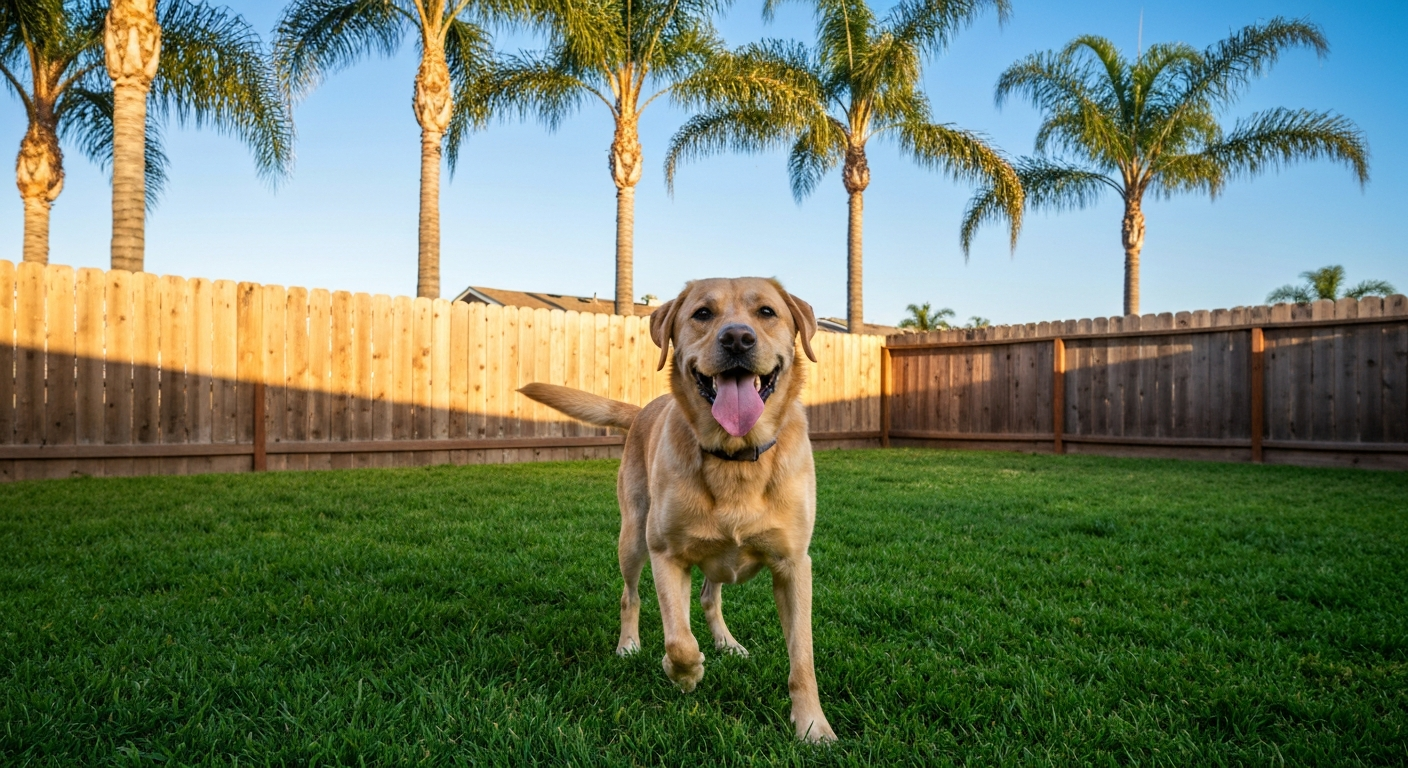
Sitters on platforms like Ruh-Roh Retreat tend to offer things commercial facilities structurally can't:
- Quiet between activity periods. A home with just a few guest dogs is a fundamentally different sensory environment than a 60-dog facility. Most dogs settle within hours rather than days.
- Consistent caregiver. The person who meets your dog at drop-off is the same person walking them, feeding them, and sitting with them in the evening. That continuity matters for dogs who need time to trust a new environment.
- Routine matching. In-home sitters across Irvine, Costa Mesa, San Juan Capistrano, and Wildomar can typically adapt to your dog's specific feeding times, walk windows, and sleep setup. Your dog's normal daily structure can carry through the stay instead of being replaced by a facility schedule.
- Real residential environments. Quiet streets, fenced yards, access to local parks and trails. In Irvine, that means paths like Quail Hill and Peters Canyon. In San Juan Capistrano, options like the San Juan Creek Trail. The neighborhood environment is part of what you're choosing — not just the indoor space.
- Real-time updates. Daily photo and video updates happen naturally when one person is responsible for a small group of dogs. For pet parents who want to follow along while traveling, this changes how the time away feels.
How to Decide What's Right for Your Dog
Searching "dog hotels near me" doesn't lead to one right answer for every dog. Here's an honest framework for making the call.
Every dog is different — the right environment depends on your dog's personality, energy, medical needs, and preferences, not a category. Some dogs love a busy, multi-dog setting; others settle best somewhere quiet. On Ruh-Roh Retreat you can compare sitters' Home Environments, Care Styles, and Key Skills to match the specific dog you have.
A few practical factors are worth weighing alongside your dog's temperament:
- Booking flexibility. If you need last-minute availability or unusual arrival and departure times, a larger facility is more likely to have space than a private sitter.
- Environment fit. Whatever your dog needs — quiet and calm, or busy and social — you can compare each sitter's Home Environment and Care Style on Ruh-Roh Retreat to find the fit. If your dog shows signs of anxiety in unfamiliar settings, that's one more thing to factor into the comparison.
- Experience with specific needs. Many Ruh-Roh Retreat sitters highlight experience with senior, anxious, reactive, or special-needs dogs — pet parents can compare Key Skills and specialties on sitter profiles to find someone suited to their dog.
- Routine. If your dog does noticeably better when their schedule stays consistent, look for a sitter who can adapt to their feeding times, walk windows, and sleep setup.
- Veterinary proximity. If proximity to on-site veterinary staff is a priority, that's one factor to weigh — many sitters also have experience administering medications and caring for dogs with medical needs, so compare sitter Key Skills before deciding.
In both cases: visit or meet before you book. For commercial facilities, a tour shows you the actual environment and noise level. For in-home sitters, a meet-and-greet shows you the actual home and whether your dog settles comfortably in that person's presence. Any quality option accommodates this without hesitation.
What to Ask Before You Book
These questions apply whether you're evaluating a commercial dog hotel or an in-home sitter in Orange County:
- What is the care ratio, and does it change overnight? How many dogs per caretaker during activity periods and through the night?
- Who specifically will be responsible for my dog? Is care assigned to a named individual, or does it rotate across the team?
- What happens if my dog doesn't settle in the first 24 hours? Any experienced provider has a clear, specific answer.
- How and when will you send updates? Frequency, format (photo, video, text), and whether updates are proactive or on-request.
- What is your protocol if there's a medical concern overnight? A named vet, a clear escalation path, and an answer to "who makes the call at 2 AM" are all reasonable things to expect.
- Can I visit before drop-off? Any quality option says yes immediately.
For a more complete checklist on evaluating pet care in Orange County, our guide to choosing a safe dog sitter in OC covers the full evaluation process.
Frequently Asked Questions
Q: Are dog hotels the same as kennels? A: Often, yes — "dog hotel" is mostly a marketing upgrade on the same commercial boarding model. Many businesses that call themselves dog hotels operate with the same structure as traditional kennels: multi-dog facilities, rotating caretakers, and kennel runs between activity periods. Some genuinely offer better environments and staffing ratios. The question to ask is what happens inside, not what the facility calls itself.
Q: How much do dog hotels cost in Orange County? A: Commercial dog hotel pricing in OC typically runs $55–$120/night depending on the suite tier and season. In-home boarding via platforms like Ruh-Roh Retreat typically ranges from $65–$90/night for full overnight stays. Both commercial facilities and in-home sitters commonly charge more during peak holiday periods, so it's worth confirming holiday rates when you book.
Q: What's the difference between a dog hotel and in-home boarding? A: The main differences are environment, scale, and continuity of care. A dog hotel is a commercial facility designed for many dogs. In-home boarding is a private residence where a dog stays with one sitter and a small number of other dogs. The in-home format typically means less noise, more consistent one-on-one attention, and greater ability to match your dog's existing routine.
Q: Is in-home boarding safer than a commercial dog hotel? A: Safety depends on the specific provider, not the category. A well-matched in-home sitter is very safe; a poorly matched one isn't. The structural advantage of in-home boarding is that many risks that scale with population — disease exposure, overcrowding, noise-related stress — are lower when a dog stays in a home with one consistent caregiver. Whether a dog does better in a home or a facility depends on the individual dog. Ruh-Roh Retreat helps pet parents compare sitters' Home Environments and experience so they can match the setting to their dog's temperament and needs.
Ready to Find the Right Fit for Your Dog in Orange County?
If you're looking for in-home boarding in Orange County — whether in Irvine, Costa Mesa, San Juan Capistrano, Wildomar, or nearby — browse sitters near you on Ruh-Roh Retreat. Each sitter profile shows their home environment, availability, and experience with different dog types so you can evaluate the actual fit before you reach out. Many platforms make it easy to find a sitter; Ruh-Roh Retreat makes it easier to find the right one — compare a curated community of experienced sitters and choose the experience that fits your individual dog.
You Might Also Like
 12 min
May 16, 2026
The Ultimate Guide to Dog Boarding in Irvine, CA (2026 Edition)
Looking for dog boarding in Irvine, CA? This comprehensive guide covers your options, what to ask before booking, how pricing works, and why in-home boarding fits Irvine pet parents particularly well.
Read More → 10 min
Jun 23, 2026
How Much Does Dog Boarding Cost in Orange County? A 2026 Pricing Guide
Wondering about dog boarding cost in Orange County? Here's what pet parents actually pay in 2026 — in-home vs. kennel pricing, what drives the price, and how to compare rates and book the right sitter.
Read More → 11 min
Jun 6, 2026
Dog Boarding in Tustin, CA: What Pet Parents Need to Know in 2026
Looking for dog boarding in Tustin, CA? Learn why local pet parents choose in-home boarding, what to ask before you book, how pricing works, and how Tustin's proximity to Irvine widens your sitter options.
Read More →